Showing posts with label farmhouse. Show all posts

Monday, September 6, 2021

Cider Review: Presque Isle Farm's Farmhouse Hard Cider 2020


I’ve not seen a bat in my house for more than a week now! And the summer’s heat has been (at least temporarily) replaced by cool mornings, golden evenings, and the freshest breezes I can remember. I’m so grateful. My weekend celebrations involved orchard time and so much fresh produce. And I love bringing out an exciting new cider to pair with my favorite recipes. That’s how I decided to open my bottle of Presque Isle Farm's Farmhouse Hard Cider 2020.

This is how the folks at Presque Isle Farm describe the project and its goals. 

Presque Isle Farm is a small centennial farm in northern Michigan. Our mission is to grow nourishing food, a healthy community, a vibrant local economy, and an ecologically flourishing environment. As the local and sustainable food movement grows nationally, we are working to bring that momentum to northern Michigan and build a foundation for health in our community and the world.

You can learn more about Presque Isle Farms online here: http://www.presqueislefarm.com/

This cider was shared with me at GLINTCAP by the cidermaker, after learning of its fantastic gold-medal performance in the competition. Many thanks! This is my first review of anything by Presque Isle Farm.

Here’s the cider’s official description.

6.9% ABV

Apples: 46% Kingston Black, 20% Northern Spy, 10% Bulmer’s Norman, 8% Brown Snout, 7% Idared, 6% Wild, 3% Rome

Tasting Notes: earthy, apple skin, over-ripe apple, dried fruit

The Farmhouse cider is our table cider blend. It is an everyday cider to drink with foods ranging from steak to seafood, to salads and greens. It contains about 20% bittersweet varieties of apples and 50% bittersharps which give it complexity, body, mellow tannins, and a small amount of perceived sweetness. The other 30% includes apples that add a balanced acidity bringing a crisp and refreshing finish. It tastes and smells of apple orchards.

And now for my experience with Presque Isle's Farmhouse 2020!
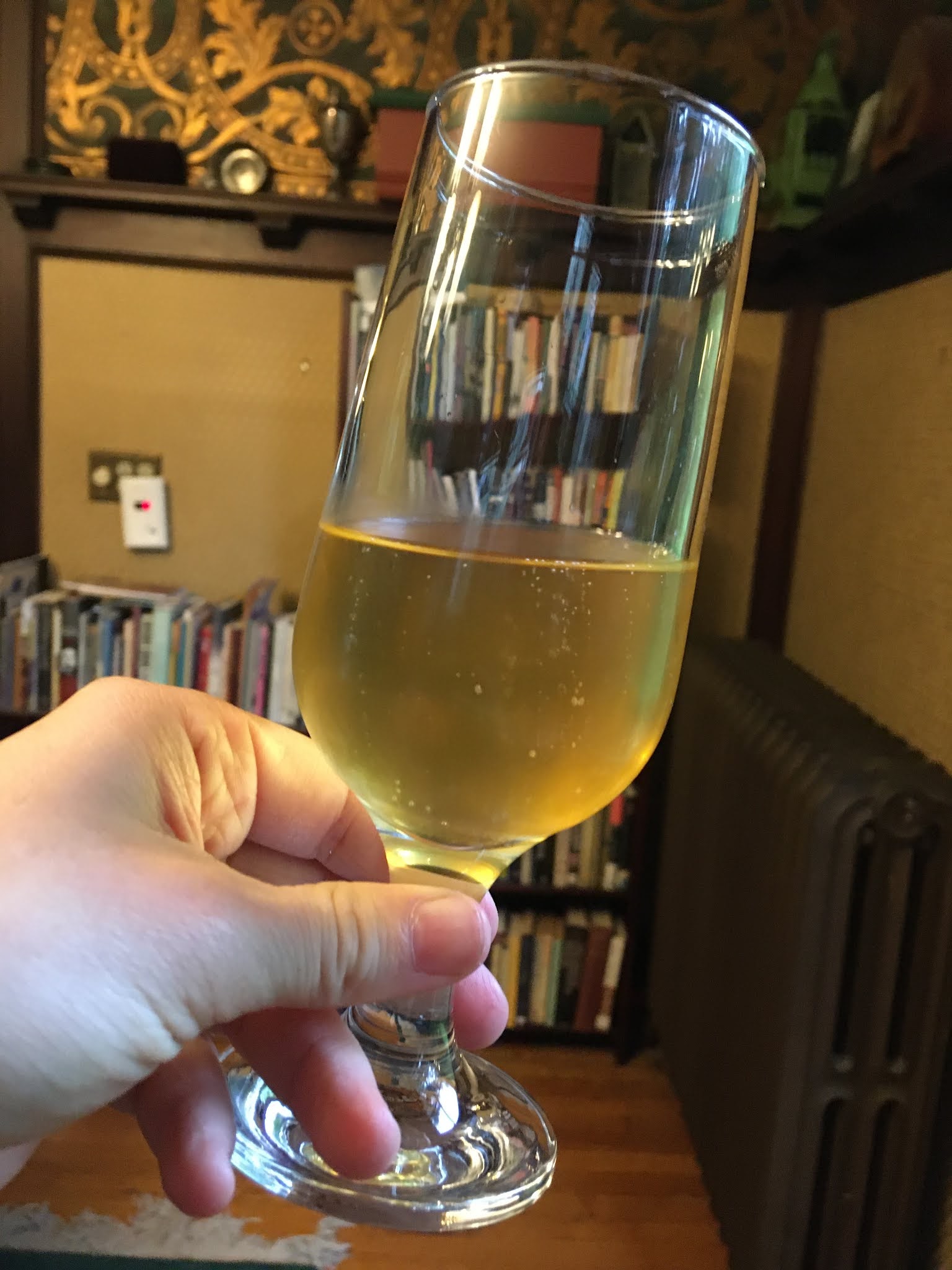
Appearance: transparent, mellow straw hue, few visible bubbles

The color of this cider reminds me of late summer dried grasses; it’s a mellow shade of straw. I’ll call the Farmhouse 2020 transparent. I can see a few stray bubbles in the glass but not many.  

Aromas: overripe apples, dried orange, leather

The Farmhouse 2020 smells absolutely mouthwatering to me. I’m awash in notes of leather, overripe apples, and dried orange. The cider just wafts up to my face and offers me many of my favorite cider aromas and creates a strong salivary reaction.

Sweetness/dryness: Dry

I love a dry cider. This cider brings flavor and dimension while remaining dry in a very satisfying way!

Flavors and drinking experience: overripe apples, fried lemon, caramel, tannic

The Farmhouse Cider 2020 evokes many of the same flavor notes in its flavors that I noticed in its aromas. This cider blooms with overripe apple, dried orange, and leather flavors. Additional dimensions like  candied orange peel and fried lemon arrive just on the palate. The cider bursts with high tannins and high acidity.

Everyone at the table was oohing and ahhing over this dry, perfectly balanced cider. The Farmhouse 2020 arrives with heft, and structure, lifted up by tiny active bubbles. Though it’s dry, somehow subtle flavors remind me of caramel and nuts; I suspect this comes from the partial barrel aging in the blend. 

I love this cider’s creamy full body, luscious fermented flavors, and balanced excitement. It was served with tomato pie, corn on the cob and a pepper cucumber salad. The pairings were seasonal and lovely.

Tuesday, June 9, 2015

Along Came A Cider Goes to England: Scrumpstock!

At last the time has come, and I get to write about my trip to England! I knew when we planned a hiking trip on the South Coast Path in Cornwall, I wanted to find a way to include at least a bit of cider adventuring. My first discovery was a cider festival going during our trip called Scrumpstock. 

 
For my readers unfamiliar with the term scrumpy, the festival is likely called Scrumpstock as a way to combine the cider term scrumpy with a hint of a reference to Woodstock, hence Scrumpstock. Scrumpy references a particularly English style of cider, but one without a clear and agreed upon definition. Wanna start a fight? Get a bunch of folks together and ask them to define scrumpy. It might mean unfiltered cider. Or cider made from apples allowed to fall on the ground before being harvested. Or cider made from juice pressed with layers of hay. Or cider only from a particular region of England. Or craft cider made in small batches with no big industrial shortcuts. And I'm afraid all of these characteristics only scratch the surface. I'm happy to hear other scrumpy characteristics in the comments; I dare you to find one I've never heard before. I'm sure they exist.

Here's a link to the festival's homepage, where one can read more about Scrumpstock: http://www.scrumpstock.co.uk

This is how the organizers succinctly explain the festival.

The Scrumpstock festival at the Exmouth Rugby Club in South Devon took place from the 15th to the 17th of May, with a wide range of quality Cider from carefully selected producers, excellent live music and much, much more.
Festivities run from 6pm Friday, until 6pm on the Sunday.

This was our weather for Saturday at Scrumpstock. I could barely believe it! Gorgeous brilliant blue skies, warm sun, and crisp breezes. We couldn't have asked for better. Enough about atmosphere and context, bring on the ciders. But how was I to choose amongst this bounty? I decided to stick to only dry and medium and only apple, no other fruits added. Mind you, this was still going to give me far more ciders than I could easily try in a day, especially when the smallest serving size was a half pint.


This is the view from behind the bar; the cider choices stretched from wall to wall, all guarded by stuffed scarecrows. My first for the day was Tricky Cider Dry. (http://www.trickycider.com/about-tricky-cider/)

The cider smells yeasty, appley and a bit bruised. I also get a ton of farmhouse and fermentation aromas. Wow, they aren't kidding to call this dry! This cider is still, dry, and astringent! I wanted to enjoy what's different about English ciders while I'm here and this is a great plunge into that territory. It looks hazy and rich in the glass and tastes leathery, citrusy, woody, grassy and farmy. Awesome.

Next, we tried Red Hen, a medium still cider from Worley's (http://www.worleyscider.co.uk). This is what they say about it:
A blend of early-season bittersweets and sharps at ABV 6.5%. Offered as a Medium, the two main characteristics of this cider are fruity apple and spice. This is a very similar blend to what we use for our popular bottled Premium Vintage cider.
A powerful fruity character is ensured by using only 100% apple juice in every batch. As always at Worley's, the freshly pressed golden cider apple juice is run into vessels and allowed to slowly ferment under the action of natural yeasts in a cool, dark barn before racking off and maturing for several months.

 This was one of my favorite ciders of the day. I got some familiar homemade apple sauce aromas along with some intriguing tart/sour notes. This cider had great balance and awesomely rich mouthfeel. It was a true medium, which is a good bit drier than many ciders labelled medium in the United States (and England too, as I was to learn later). This had a lot more acidity than the Tricky cider and some fun floral components while being cleaner than average. Simple but pleasing.

At this point, it was time for food and my husband and I shared our first Cornish Pasty: a cheddar, potato, and onion pasty. The angels sang. The earth stood still. Perfection had been reached. The combination of cider and pasty make everything wonderful. Read about them for inspiration; eat them and change your life: http://en.wikipedia.org/wiki/Pasty


After that, and some fantastic trampoline bouncing, we were ready for another round of half pints. We chose  Devon Mist (by Sandford Orchards) and Venton's Skippy's Scrumpy (dry).

You can read about Venton's Devon Cider here: http://www.ventons.co.uk  and Sandford Orchards here: http://www.sandfordorchards.co.uk


The cider on the left is the Devon Mist, and I chose it because I was ready for a sparkling cider. Most of the ciders on offer at Scrumpstock were still (non-sparkling). It smells grassy, fresh, cold, with notes of both apple and tropical fruits. This tastes more like a sweet than a medium to me with relatively low acid and surprisingly low levels of tannins. Sweet and lightly and lightly sparkling it has notes of fresh apple and pear and asian pear aplenty.

On the right, we have Skippy's Scrumpy by Venton's. this cider smells a bit salty, earthy, sweaty with some apple skin notes. I love the creamy mouthfeel caused by the combination of high tannins and high acid. It is a bit leathery and not completely dry. This didn't have barnyard in the flavor, though the smell led me to expect it. I like the orange peel bitterness and subtle sparkle.

After these, we had some delicious cupcakes and walked around town a bit before returning in time to see The Go Go Cult (http://www.thegogocult.com/GoGoCultSite/Welcome.html). While it was a bit surreal to enjoy gothabilly music at a daytime outdoor festival; I enjoyed them tremendously, and I know I wasn't the only one.

 
Our last cider of the day of was Hunt's Farm Cider Medium (http://www.huntscider.co.uk) . It smelled barny, nutty, and mild, and like freshly washed apples. Another still cider, but this one more clear than many. I noticed huge levels of tannins and flavors like maple, oak, burnt matches, with some tartness and good body. Really interesting thing about this cider is that it is a completely wild ferment that gets aged two years before release. This couldn't be more different than a lot of the ciders here, and both styles have their distinct advantages.


There were so many great ciders and vendors, I truly wish I could have tried them all. Scrumpstock was a fantastic day filled with good tastes and glorious sunshine.

Wednesday, September 17, 2014

Cider Review: Whetstone Ciderworks' Orchard King


Today feels like fall. Though the season doesn't officially start until the equinox on Sunday, the mornings are crisply cool, leaves are changing color, and apple harvest has started for the year.  I love these earlier cooler nights, for that that it means that winter and real cold cannot be too far behind. It is a season for visitors here in Ithaca, and today's review is for a cider I shared with dear visiting friends recently. They like dry challenging ciders, so I pulled out something I thought might be a bit special, Whetstone Ciderworks' Orchard King.

Here's a bit of background on Whetsone Ciderworks that I found on their website. The company has been around since 2010. Jason and Lauren MacArthur started Whetstone Ciderworks in Marlboro, Vermont. They appear to have a few really interesting identifying features as a cidery.

They do focus on local fruit. This what they have to say about that, "All of the apples we use are grown locally- this past year, most were from Scott Farm in Dummerston, some from Poverty Lane Orchards in Lebanon, NH, and even a few from our own small orchard."

This, plus the description of Jason MacArthur's winemaking influence make me really excited to try their ciders. I love it when cidermakers show a genuine focus on apples, climate, and the under-realized similarities of cider and wine making. Anyhow, that's my own bias talking.

You can find out plenty more on their actual site http://www.whetstoneciderworks.com/ or their Facebook page. https://www.facebook.com/pages/Whetstone-CiderWorks/209863572381300

In looking at a few Whetstone Ciders, I though I'd start by sharing and reviewing their Orchard King. It sounds complex and truly expressive of their cider-making goals.

Here's what Whetsone has to say about their Orchard King, "This extra-dry, bottle-conditioned cider is effervescent and refreshing. Yarlington Mill, Orleans Reinette, and Major are among the apples that impart tastes of citrus and apple, leading to a delicate, smoky finish. A fabulous 'cocktail hour' cider."

This cider is sold in 750ml bottles and has an ABV of 7.5%.


Appearance: cloudy, deep creamy color, very little visible bubbling

I can see a ring of very fine bubbles around the edge of the glass and a few tiny islands of bubbles, but not much more. This cider is hazy to cloudy and shows signs of being bottle conditioned. This matches the official description, so that's good. The cider is a creamy rich gold in color.

Aromas: Leather, Ripe Apples, Clay

The Orchard King smells fascinating, rather like leather and limestone and deliciously ripe apples. I also detect notes that remind me of wood and clay. One of my fellow tasters got hint of lily aromas, and I think she's spot on. I get some phenols but not to a distracting or negative degree. I really enjoy how rich and complex this cider smells.

Sweetness or dryness: Dry

Definitely at dry cider! This doesn't taste the least bit sweet until the finish, but then some hints of warm sweet oats and breadiness kick in. I love the dryness and the shift just at the last moment. Very interesting.

Flavors and drinking experience: high tannins, medium high acid, some degree of farminess

The Orchard King tastes monstrously tannic and fabulous. This cider comes across as lightly fizzy more than deeply bubbly. It shows a bit of farm funk with some hints of metallic flavors. The Orchard King balances that weight of tannins and funk with some intense acidity, making this a complex and bombastic cider. It tastes very rustic, even a bit medieval.

I enjoyed this with grapes, cheese, cookies, and wonderful friends. I think they were the most important accompaniment to this cider. It doesn't need lot in the way of foods. The Orchard King offers enough interest and flavor to stand on its own, but it could also easily pair with hearty foods. I would not enjoy this cider so much with anything super spicy or acidity, but balance it out with non-competing flavors like farmhouse bread, cheese, and fruits.

Thursday, August 21, 2014

Cider Review: Farnum Hill Farmhouse Cider

Apologies for the brief hiatus, cider drinkers! Many things have been afoot in the world of Along Came A Cider. Most exciting to me though is that HQ has moved yet again, and this time for to be settled for a long while. And that is a feeling that goes well with any pleasant beverage.

For the time being though, let me share my most recent adventure with a Farnum Hill cider.

Let us begin with the fact that Farnum Hill is serious about cider and about using cider apples. If you want to see this for yourself, you can find evident all over their website:

http://www.povertylaneorchards.com/farnum-hill-ciders/

On the one hand, I love that. Cider is worthy of being taken seriously. It is a seriously delicious and complex beverage. Different apples make for different ciders, and Farnum Hill has invested in cider apples much to the benefit of their ciders. But to represent that other hand, I have to say that I'm not completely into the tone that their seriousness takes.  For example, "On Farnum Hill, we stick to the true meaning of the word 'cider:' an alcoholic beverage fermented from particular apples, just as 'wine' is fermented from particular grapes." Anyone who starts talking about true this or true that starts to lose me, I must say. There are a lot of ways to do anything, and calling one way true starts to mean calling all other ways false, and that sounds a bit limited and unnecessarily disdainful.

Consider me a rebel, but this seems a bit silly. The cider world has room for many style and even more bottles. I will absolutely line up to taste and try what Farnum Hill offers, but I'm not going to sign up for a "one true way" for cider.

Speaking of my fondness for their actual beverages, I have reviewed one Farnum Hill cider in the past. Find my review of their 2013 summer cider here:

http://alongcameacider.blogspot.com/2013/09/cider-review-farnum-hill-summer-cider.html

But for tonight, it is all about Farmhouse Cider. 

This is how Farnum Hill introduces this cider:
Farnum Hill ‘Farmhouse’: Alcohol content: 6.5% by volume. Available in 750 ml bottles with mushroom cork & wire hood.
Our most casual cider, pale gold and bubbly, with a stroke of sweetness along with the tart, bitter, and fruity elements that good cider offers: citrus, pineapple, bittersweet apple, and a whiff of good barnyard funk. Farmhouse astringency is nowhere near the extreme, but shows a certain tannic edge. Agreeably versatile, it shares certain flavor elements with both beer and wine. A clean, appetizing finish makes it congenial with many kinds of food, from the snackiest through the meatiest to the whole-grainiest and back.
People fond of English or Irish commercial ciders often like our Farmhouse, though its sweetness is a fraction of theirs. Imagine a fresh-tasting second cousin to Magner’s (alias Bulmer’s Ireland), and subtract the sugar. ‘Farmhouse’ is more of a pub cider than our others. It varies a bit more from batch to batch, shows less complexity less alcohol than our others, and of course is less filling than beer. It and Semi-Dry are the most popular of our regular ciders. ‘Farmhouse’ is blended from a group of real cider apples that ripen earlier than most. So it’s a bit easier to make and less expensive to buy.
The tannins in the Farmhouse Cider taste more bitter and feel more rustic (rough?) than those in our more elegant blends. You who wince at the tannins in Farmhouse might find pleasure in our smoother, more complex Semi-Dry.
(For the ultimate in tannic astringency, journey to certain farmstead operations in the West of England. Any of their serious bittersweet ciders convulse the oral membranes with eerie power. Ageless residents of rural Somerset or Hereford can chat and sip all day, gently propped against barrels, freed by cidrous tannins from time and harm. Or that’s how it looks.)
Whoa. That's a mouthful. Let's dig out a few concrete specifics to use when tasting this cider. I'm guessing this will be an off dry cider (meaning not entirely dry but also drier than a semi-dry) with medium to high tannins. I anticipate some bitterness but not enough to entirely crowd out fruit notes. Sounds enticing enough. I'm curious.


Appearance: deep topaz, not many visible bubbles, brilliant

This is a lovely cider in the glass. That depth of colors supports the description of tannins and heritage fruit, but none of that is a surprise. Though the photo doesn't reveal this, when first poured, I can see that this will be a slightly sparkling cider, but the bubbles calm down quickly.

Aromas: overripe apples, dust, summer storms

Luscious smells. This cider makes my mouth water with that combination of warmed overripe apples and mineral dust. This is my second clue that this cider will taste tannic, so that's consistent with its appearance and description. But now I'm getting in a hurry because it smells so good that I want to taste it absolutely right now.

Sweetness: off dry

This cider, as predicted, tastes more than semi-dry but not completely dry and not at all harsh. This truly is a drinkable off dry.

Flavors: Tannins! Slight bitterness, good structure, woody

The Farmhouse Cider tastes highly tannic, but it balances that out with plenty of fruits and medium acidity. What the tannins contribute are good structure and body with some delightful drops of mild bitterness. My only complaint is purely personal. It has not very strong petillance, meaning it sparkles just a touch on the tongue but I would like perhaps a touch more. This is decidedly an easy drinking cider for the aficionado, and at the same time a beautiful and complex education for the more casual quaffer. I keep noticing the slight levels bitter astringency, but you know that's how I like it.

This cider offers a long woody finish that gets a bit sweeter at the very very end. Friendly.

In terms of pairings, I think I want both some fattiness and some mild sweetness to best highlight what I enjoy about this cider. If I were near the ocean that would mean lobster roll and homemade potato crisps. *swoon* Since I am significantly land-locked, avocados spring to mind. Perhaps an avocado and tomato salad with chickpeas, cucumbers, sesame seeds, and a lemony drizzle. Or roasted corn on the cob with feta cheese and veggie burgers. Lots of summer foods would match this beautifully.

Farnum Hill didn't get their intense reputation by making mediocre cider. This is an elegant and deeply enjoyable experience. I am grateful for the apples and expertise that went into this. If they could relax a tiny bit about themselves, they'd be pretty much perfect.

**Don't forget! If you need my address for any cider-related reason, particularly if you want to send me your delicious cider for review, contact me via email or comment  to get my new address!**

Monday, February 3, 2014

Cider Review: L'hermitiere Cidre Demi-Sec (AKA My First Review of a Normandy Cider!)

 I wish I had a lot more information to share about this cider. I found it at a local bottle shop (a new spot call Pop a Top) in Gainesville, Florida while visiting and saw it listed on the drink menu at Stubbies and Steins (which happens to have the best selection of cider and beer of any bar or restaurant in town). L'hermitiere Cidre Demi-Sec has an ABV of 4%. It comes in a 750ml bottle like many fine ciders of all stripes and traditions.

What I can do is talk just a little bit about the Normandy style to give some context to this review. Mind you, I also want to share the caveat that this is my understanding of Normandy ciders. Please don't come after me with barrels and pruning shears if you don't like what you read.

When different regional styles are discussed apple choices, tannins, acidity, sweetness, and effervescence are usually considered among other factors. Normandy ciders frequently have high levels of tannins and use cider varieties of apples. Though there can be some variance in sweetness, most Normandy ciders are either sweet or semi-sweet; I would be surprised by anything bone dry. These tend to be low acidity ciders by and large. Fermentation usually is completed within the bottle, so all sparkle or effervescence is naturally occurring. I also tend to note some degree of farminess to either aroma or flavor but that can be either subtle or pronounced. I like a fair amount, but that's just me.

Okay, on to tonight's cider!


Appearance: hazy, warm honey, plenty of active bubbles
 
This has a beautifully warm appearance that comes from the depth of color and haziness in the L'Hermitiere Demi-Sec. As the photo shows, it has plenty of bubbles and shortly before the photo was taken the cider briefly had a bright white head of foam that vanished quickly. 

Aromas: ripe apples, wet hay, with a hint of sourness

This has a very moderate and pleasant level of farmyard to the aroma. I can get leather, cheese, and hay in there, but all underneath the more predominant smells of ripe apples and yeast.

Sweetness: Semi-sweet/sweet

This is absolutely on par for a Normandy cider. It has plenty of sweetness, but it doesn't harm the complexity or the mouthfeel. That's what I like in good quality sweet ciders. The flavors are rich and fruity and completely natural.

Flavors and Drinking Experience: Fruit, oak, tannins, and sweetness

This tastes like it was aged in neutralized oak barrels, ie barrels that have been used again and again. The funk from the smell is back in the flavor in a way that definitely suggests some Brettanomyces in one or more strains. I love it, but I'm not sure all American cider fans would want that because it isn't exactly like the super clean ciders that lots of quality United States cider producers are selling. The fruit is very approachably apple with hints of cherries. It dries out a bit toward the end and the wood notes predominate in the finish.

I loved getting to taste this and share it with too rarely seen friends. It is a great conversation cider and tastes just wonderful both chilled and even after holding it in the glass a while. For foods, I'd have this with seafood perhaps some sweet scallops or lobster. Enhance and appreciate the sweetness and complexity with a food that is also just a touch sweet. I'd not go so far as to name this a dessert cider though. Honestly, it doesn't need any food accompaniment though. Just good company.

Friday, August 9, 2013

Cider Review: Distillery Lane Ciderworks Traditional Dry Sparkling Cider


Distillery Lane Ciderworks makes and sells cider in Jefferson, Maryland near the town of Burkittsville. They are the first licensed cidery in the state. I first heard about them first through a fellow cider blogger who lives much closer, but they have a really interesting story and location. Their website tells it far better than I could here, http://distillerylaneciderworks.com/ Be warned that though the website has great info, it does have a tendency to spit visitors back at the front page unexpectedly.

The Traditional Dry Sparkling Cider is the first cider I've gotten to taste from Distillery Lane Ciderworks. The ABV is measured at 7.5%. Here's what the cider makers have to say about it, "Our Traditional Dry Sparkling Cider is made from a blend of English, French, and American cider apple varieties. The blend of apples gives our ciders the right combination of acid, tannins, and sugar to make fine hard cider.  We take the well-balanced cider blend and allow it to finish the fermentation process in the bottles (similar to bottle-conditioned craft beers).  The result is a fully dry, sparkling beverage that is perfect for a hot summer day or an evening toast. Many people have commented that this hard cider is very similar to champagne."


Appearance: significantly Hazy, mellow lemon curd color

The Traditional Dry Sparkling has a warmer tone than many ciders. After pouring, I noticed a ring of mousse around the glass. The cider looks so hazy it appears that the tiny bubbles have to fight their way to the top.

Aromas: fresh apples, lemon peel, hay

I notice enough fabulous smells that I am positively champing at the bit to actually taste this one.

Sweetness: Dry

Deep bone dry. This is what I've been waiting for. So many ciders that get described as dry don't taste fully dry to me, and this one actually does. This means it is a cider for people who know and love the beverage rather than first time cider tasters.

Flavors: citrus zest, minerality (stones), wood and smoke

The Traditional Dry Sparkling shows its high level of tannins, making it taste smoky, almost meaty. I tasted medium to high acidity, but I'm definitely still getting a handle on how to gauge acidity. It was enough to make the cider citrusy but not enough to trouble me, and I'm not the biggest fan of super high acidity ciders. The cider is so British in style that it makes me long for Norwich, where I first enjoyed cider.

Drinking experience: warming, strongly sparkling, structured

The full mouthfeel and strong body really point to their use of cider apples. I enjoy the level of carbonation because I can drink it very comfortably, but I won't accidentally finish a glass without noticing. The thing about its warmth is that this cider tastes like it has a higher ABV than it actually does.

Drink this in the afternoon while listening to Bowie, The Smiths, Morissey, whatever British music moves you. Don't invite anyone talkative over. This cider deserves your full attention. Fantastic.

Saturday, April 20, 2013

Cider Review: Arsenal Cider Cannoneers Bone Dry Sour Cherry and a Cider Event!


Today, I’m sharing my review for another cider from Pittsburgh’s Arsenal Cider and Wine Bar , The Cannoneers Bone Dry Sour Cherry. I previously reviewed their signature cider, the Fightin’ Elleck which has since gotten a silver medal at the 2013 Finger Lakes International Wine Competition. If you want to find information about their current offerings, rather than using their website, I’d suggest going to their frequently updated Facebook page. This Pittsburgh cidery sells by the 1 litre refillable growler, and their local tap list grows by the week.  


At first I was skittish about even trying a free sample of the Cannoneers Bone Dry Sour Cherry  because I tend to dislike most cherry flavors. Even most varieties of cherries themselves. Once encouraged, I will try most ciders, and this one was full of surprises.
 

The ABV clocks in at a whopping 11.5% which means that our 1 litre growler is a pretty potent sell. I had some very interesting tasting help from my husband and our good friend Aaron (who is usually a scotch or beer drinker). Arsenal ciders are carbonated right at the bar, so I was curious how this one would do after waiting unopened for about five weeks.  On to the review!
 

Color and appearance: deep pink, a few visible bubbles, no cloudiness
I tend to love the ciders with deep naturally occurring color. This one is beautiful. It looks like a sparkling rose in the in the glass.
Aroma: Funky, farmy, fruity
 

The Sour Cherry doesn’t actually smell very much like cherry. Its dominant impression is resinous and funky. The fruit comes through more as apple core and red currants. Some of our tasters noticed some mineral elements that reminded them of shellac, but for me this has a very pleasant farmy barnyard smell. Many of my favorite English ciders have aromas in this family.
 

Sweet-dry scale: off dry
 

Though Arsenal calls it bone dry, I’d call it pleasantly off dry. It is too fruity to taste completely dry, but it could not be called sweet.
 

Drinking experience and flavors: Carbonized cherry crumble, Chestnut, pulp
 

Between all three tasters, we got associations and impressions in a few different directions. We each tasted the cherry more than we had smelled it, but between the carbonation (which remained good and strong in the unopened growler) and the dryness, the cider does not taste like fresh cherries. It has a pastry quality, more like a cherry crumble. We also agreed on a warm nuttiness that probably connects to the fairly full and oily mouthfeel. I love a robust mouthfeel in my ciders! I also tasted hints of wet paper pulp amidst the green pear and slight tannic puckering. The Sour Cherry is a cider that is better than the sum of its parts, some of which are a bit weird. The overall experience, however, is truly enjoyable.

Finish:  Salt, lime, well water
 

For Aaron, the finish reminded him of the saltiness of Islay Scotch, but for me it was all citrus and minerals. That’s how I understand tasting salt and lime.
 

Drinking Notes: The added carbonation remained strong in the unopened growler quite well for more than a month. I’ve been drinking the cider little by little and the carbonation has waned understandably after the growler has been opened.
 

The Cannoneers Bone Dry Sour Cherry pairs very well with potatoes. I'd be more specific, but I think this cider shows real flexibility in terms of food accompaniment. I'd love to drink the Sour Cherry with an au gratin or with garlic mashed potatoes or even with fries and a sandwich. I'd stick with savoury pairings, but within that category, you can go nuts.
 

The cider is available in house and at some local Pittsburgh bars and restaurants. I can heartily recommend Arsenal's Sour Cherry Cider to folks who enjoy the funkier side of the beverage. It singlehandedly changed my mind about cherry ciders.
 

Also, Arsenal is organizing a Pittsburgh Cider and Mead Festival for April 27th!


Check out the info on their handy dandy flier.

Monday, February 4, 2013

Cider Review: J. K.'s Northern Neighbor Farmhouse Cider

 
J. K. makes a number of organic ciders and represents the efforts of Almar Orchard in Michigan. Depending on who you ask, the J. K. can either stand for Jim Koan or Jim and Karen, and in either case, it connects the cider maker to the cider. These folks take great pride in what they do and claim a continual cider-pressing tradition dating back to the 1850s, something truly unusual in the United States. Their website is well done and full of interesting information. I must admit though that I do have my doubts about how they use some cider terminology like scrumpy. (Maybe I'm just being an English major.)

This particular J. K. cider is their Saskatoon Cuvee; it is made using a mixture of Michigan Apples and a Canadian prairie apple: the Saskatoon. I wish I could find out more specific information on this particular cider of theirs, but I can say that these apples hail from the region of Saskatchewan. The term Cuvee is not precisely regulated, but usually implies a special blend that is set apart from a maker's usual stock. That certainly seems how it is used in this case.

Color and appearance: red and cloudy

To see this much red in a cider is totally unusual. I cannot believe I forgot to photograph the cider. It is beautiful in the glass and would be perfect for creating some romantic atmosphere for that simultaneously beloved and dreaded upcoming holiday, Valentine's Day.

Aroma: sweetly tangy, red fruits, carrot

Lovely and gentle, slightly tangy. The scent of this cider could be described as slightly vinegary. It makes me very curious to see how it will taste.

Sweet-dry scale: Very Sweet

The sweetness is immediate and palpabale. If you’ve tried any ciders by J. K. Cider you’ll recognize it, because it is characteristic of the brand. All of their ciders are quite sweet. Let that be a litmus test before you decide to try it because sweetness as a quality does so often divide cider drinkers. I think the cider would be better less sweet, but I also know folks who would prefer this.

Drinking experience and flavors: thick fruity start, sweet, fast

Cherry, and lots of fresh red fruits. The level of carbonation is mild. This paired with the sweetness could make this a quick, easy-to-drink cider. I like it, but I can easily see how it would be too sweet and uncomplicated for some cider fans.

Finish: vanilla

Beautifully lingering finish, it is perhaps the best thing about the cider.

Drinking Notes: pair with desserts, could be great for a cider float

The whole picture, a beautiful red cider with loads of sweetness and easy approachable flavors, medium sparkle, and a vanilla finish suggests romance to me. I'd pair it therefore with some sweet baked goods like red velvet cupcakes or milk chocolate. Drink it with a sweetie.

Photo Credit: Original photo by Bruce at J. K. Cider. He helped me out since I forgot to photograph this one at all. Editing by me via Flickr. 

As a bonus/apology. I do feel very sorry for failing to take my usual product photos. What is the best way to apologize in photos? Cat pictures. So, without further ado, here is a picture of all of the cats at Along Came a Cider HQ being lazy.
 

Monday, January 14, 2013

Cider Review: Prima Most


Tonight I’m reviewing something quite special and unusual. Prima Ciders come from Long Grove, Illinois, near Chicago. Prima has spent over 30 years on their cider-making process, though their labors have only been available to the public for a fraction of that time. Only six liquor stores in the United States sell their locally beloved ciders. While visiting Chicago over the weekend, I purchased a 750 ml bottle for 18.50; this would be a bit steep for ordinary cider, but tasting the Prima Most really is a rare opportunity.

The Most cider, one of their three varieties, contains 7% abv. The special methods Pima uses for the Most cider include cold-cellar fermentation and bottle or cask conditioning. They refrain from filtering their ciders for a farmhouse cider taste, look, and experience.

Color: cloudy light blonde

Immediately after pouring, this cider gives the glass an almost frosted appearance because of its color and cloudiness. The Most cider makes a tremendous fizz in the glass, but the bubbles dissipate quickly rather than forming a head. The choice to share this cider unfiltered supports its claim of being farmhouse style, at least in appearance. Let’s find out how it smells.

Aroma: sour and fruity, red currants, hints of funky fermentation

The smell is sharply unlike most American ciders in its bold earthiness. It harkens to English farmhouse ciders of the rough and rustic sort. The cider’s aroma reminds me of The Black Rat, a Somerset cider, but with less horsiness.  

Flavors and drinking experience: lemon zest, grapefruit, lots of carbonation 

The Prima Most gives a first impression of a citrus bitternessness that is tremendously refreshing. This smoothly transitions into a crab apple bite that makes me feel just a bit of tannic pucker in my cheeks and jaw. For a farmhouse cider, it is aggressively effervescent. Wonderfully balanced.

Sweet to dry: dry

 The combination of a more sparkle with true dryness and fruit notes is a surprising and satisfying combination. I love how dry it is, but I expect that it will surprise some cider drinkers who haven’t had any small batch dry ciders before. The American cidery with the most in common with this quality of dryness has to be Farnum Hill. Good company to be in.

Finish: Extra lemon on the back, minerals

It has some of the mineral qualities of a dry white wine, but the citrus farmy notes definitely give the last impression.

Pairs with: salad, many cheeses, and whole grain breads

At the risk of sounding stereotypical, this farm-style cider goes well with simple foods. A heavily-grained bread like oatmeal bread or a dense wheat would be a delightful counterpoint. To bring out the light fruitiness of the cider, it could also be paired with salads. Like many many many ciders, it enhances a whole spectrum of cheeses delightfully. Since this cider is relatively hard to come by, I'd not suggest pairing it with any activity at all. Let the Most be your entertainment.


This cider makes me sad to leave Chicago, despite the terrible weather. The Prima Most shocks me with how good it is. This cider has some of the best characteristics of English and American cider traditions. The aromas tantalize; the flavor satisfies; the bubbles add zip. What a wonderful beverage. I hope someday to be able to try their other two varieties.